Brain Bar
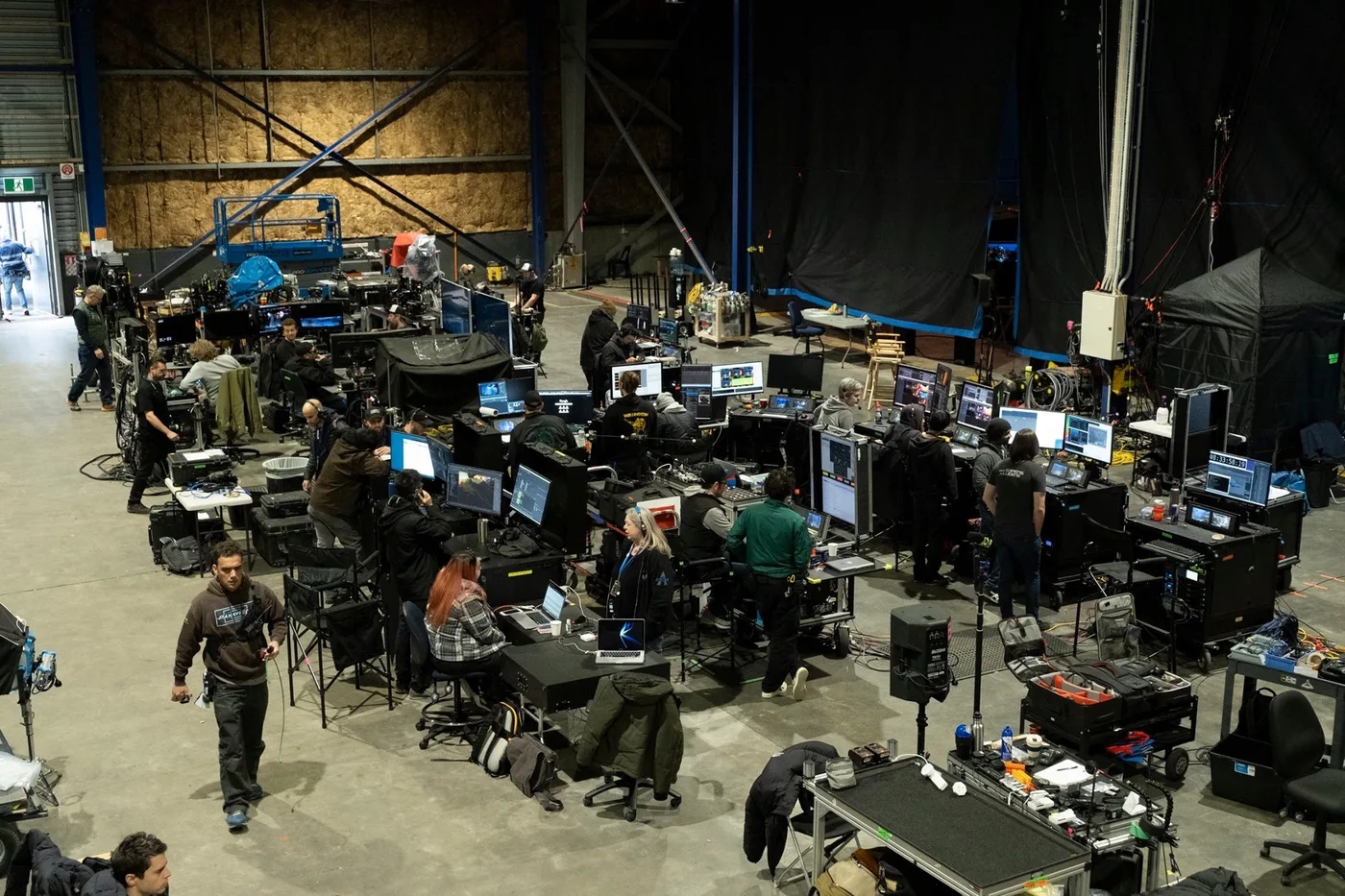
Multiple Bigfoot systems deployed as the virtual production nerve center on the set of James Cameron's Avatar: The Way of Water.
The Brain Bar
On the set of a film like Avatar: The Way of Water, the "Brain Bar" is the nerve center of virtual production. It's where dozens of operators sit side by side, running the real-time rendering engines, motion capture systems, virtual cameras, and live compositing tools that make a production of this scale possible.
Every workstation in the Brain Bar needs to house high-performance computing equipment, multiple monitors, specialized input devices, and miles of cabling — all while remaining mobile enough to be reconfigured as the production's needs change from scene to scene.
The Challenge
James Cameron's virtual production workflow for Avatar: The Way of Water pushed the boundaries of what was possible in filmmaking. The performance capture stage required a massive array of workstations running simultaneously — real-time rendering engines, motion capture processing servers, virtual camera operation systems, and live editorial stations — all coordinated in one space and all needing to operate flawlessly during active capture sessions. The sheer scale of the production meant that approximately 15 to 20 operator stations had to function in concert, each running specialized software and high-performance computing hardware that generated significant heat and demanded clean, stable power.
Traditional desks and fixed installations would not work for a production of this nature. The Brain Bar needed to be reconfigured constantly as different scenes required different operator layouts, different equipment groupings, and different spatial arrangements on the performance capture stage. With fixed infrastructure, each reconfiguration could take hours — time that directly cut into the shooting schedule. Equipment had to be protected during moves, cables had to stay organized across dozens of interconnected stations, and every workstation had to be production-ready within minutes of being repositioned. The production also operated across multiple stages and shooting phases spanning years, meaning the systems needed to endure sustained, heavy daily use without degradation.
The Solution
Bigfoot supplied multiple mobile workstation systems configured specifically for the Brain Bar's virtual production workflow. Each cart was custom-built to house the specific computing and monitoring equipment required for its operator's role — from high-end GPU rendering workstations to motion capture processing servers to virtual camera control stations. The configurations drew on Bigfoot's Double Rack and Double Rack XL platforms, modified with enhanced ventilation systems, additional power capacity for high-wattage computing equipment, and custom monitor mounting to accommodate the multi-display setups each operator position required.
The mobile platform meant the entire Brain Bar could be rearranged between setups without disconnecting or re-racking any equipment. Operators simply rolled the carts into their new positions, connected power, and the crew was ready for the next shot. Integrated cable management kept the hundreds of data, video, and power connections organized even during rapid reconfigurations. When a scene wrapped, the whole Brain Bar could reconfigure in a fraction of the time a fixed installation would require — estimated at approximately 15 to 20 minutes compared to what would have been several hours with traditional infrastructure. Custom labeling and color-coding systems were applied to each unit to help the production crew quickly identify and position the correct workstation for each scene configuration.
The Results
The Bigfoot systems became the physical infrastructure of one of the most technologically ambitious films ever made. The Brain Bar operated throughout the multi-year production of Avatar: The Way of Water, supporting the groundbreaking underwater performance capture sequences and real-time virtual production that defined the film. The systems endured daily use across thousands of shooting hours with an estimated uptime rate exceeding 99%, ensuring that the production was never delayed by workstation infrastructure failures.
The reconfiguration flexibility provided by the Bigfoot mobile platform saved the production an estimated several hundred hours of setup time over the course of the shoot — time that translated directly into additional capture sessions and creative flexibility for the directing team. Equipment protected inside the Bigfoot carts suffered virtually zero transport-related damage despite constant repositioning on the stage. When your equipment has to keep up with James Cameron, there is no room for compromise. Bigfoot's mobile workstations delivered the reliability, flexibility, and build quality that a production of this magnitude demands. Contact us to discuss how Bigfoot systems can support your virtual production or large-scale creative workflow.
Build Your Virtual Production Infrastructure
From single-operator DIT carts to full Brain Bar deployments, we build mobile workstations for the most demanding productions in the world.
Start Your Custom Build